
AI chatbots for Italian ecommerce: how to really evaluate one, with 15 test questions
by Altravista, ecommerce
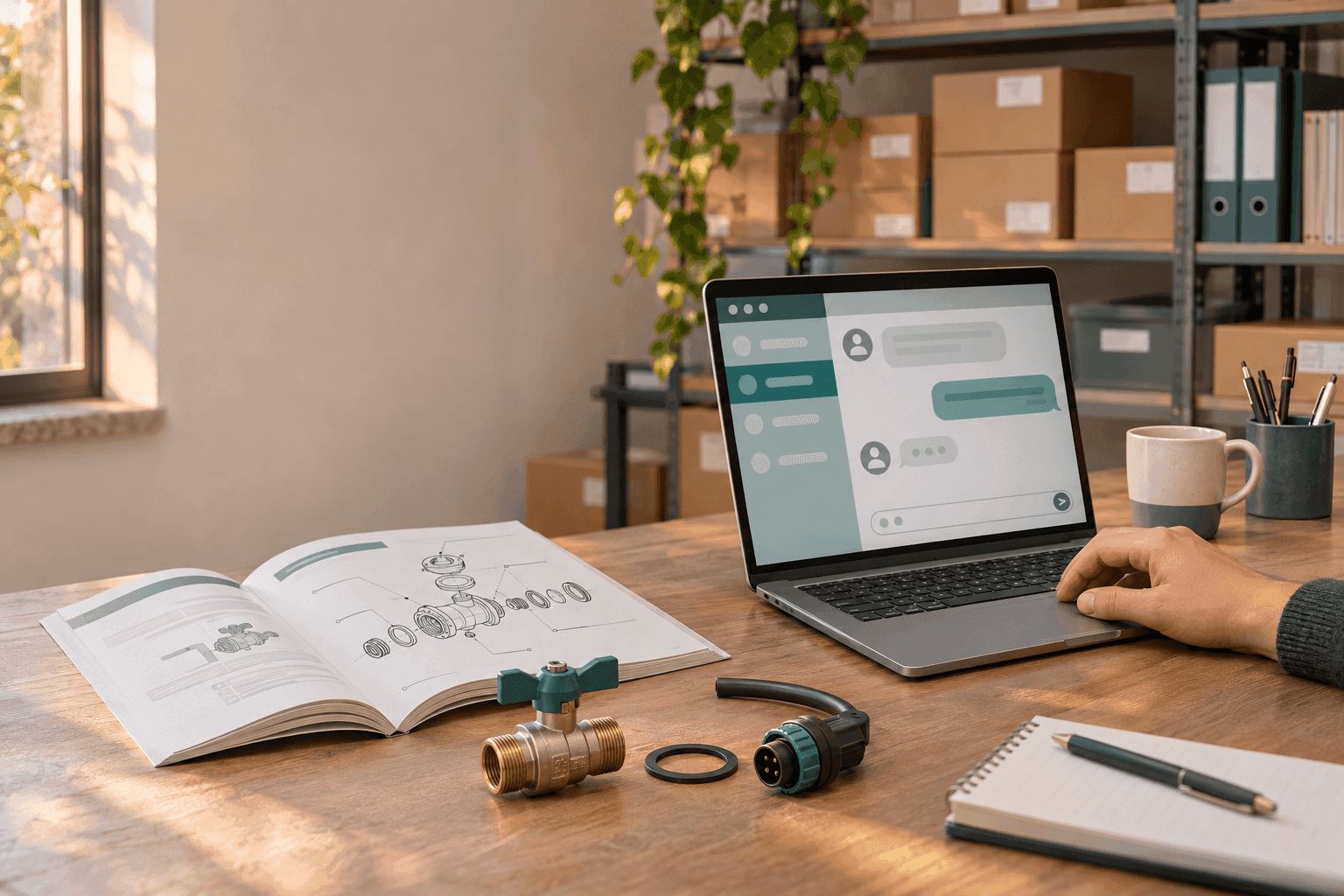
Anyone looking for an AI chatbot for an online store today will find dozens of products that claim to work "in Italian". Most of the time that is true only in a narrow sense: the interface has been translated and the language model can write correct Italian sentences. An Italian online store needs more than that. Its customers write the way they speak, prices include VAT, the right of withdrawal has its own rules, couriers and management software are Italian, there is a national data protection authority, and since August 2026 the transparency obligations of the European AI Act apply.
This guide is for evaluating an AI chatbot for an Italian ecommerce business before choosing it, whoever the vendor is. It covers six areas to check and ends with 15 test questions to put to the chatbot during a trial. They are the questions your customers will actually ask, and the ones a vendor-led demo usually avoids.
Why "in Italian" is not enough
A modern language model writes good Italian; there is little left to prove there. The problem lies elsewhere. A store's chatbot is not there to make conversation. It has to answer correctly about a catalogue and a set of precise rules, in the way Italian customers expect.
The differences show up in three places.
- The sources. Product pages, manuals and FAQs of an Italian store are often a mix of Italian and English. The German or Chinese manufacturer's manual is in English, the store's product page is in Italian. The chatbot has to read both and answer in Italian that is consistent with the trade's own vocabulary, without literal translations from English.
- The rules. Returns, the legal guarantee, delivery times and costs, invoicing: customers see these answers as the store's official position. A mistake here is not a matter of style, it is a dispute.
- The operating context. The couriers, platforms and management systems most common in Italy are not always the ones international products have ready-made integrations for.

1. Language quality, beyond grammar
This is the easiest check to underestimate, because in a demo everything seems to work. Look at five things.
Register. Does your store address customers with the informal *tu* or the formal *Lei*? The chatbot must keep that choice for the whole conversation, even when the customer switches. A sudden jump between the two is the clearest sign of machine translation.
Technical vocabulary. Every trade has terms a translator does not know: thread sizes, flue pipes, sockets, service kits, exploded views. The chatbot must use the words your customers and technicians use, not their literal translation.
Formats. Prices written as "1.299,00 €" rather than "€1,299.00", dates as day/month, metric units, VAT included for consumers and excluded for businesses if you also sell B2B.
Customers' real Italian. Questions arrive with typos, abbreviations ("x" for "per", "qnt" for "quantità"), no punctuation, sometimes dialect words or misspelled brand names. A good chatbot still understands the intent.
English sources. If part of your documentation is in English, ask questions whose answer is only there. The chatbot must reply in Italian, with the right units and terms, and without leaving English sentences in the answer.
2. Personal data and GDPR
A chatbot conversation almost always contains personal data: a name, an email, an order number, sometimes an address or a problem with a product. The store remains the data controller, and the chatbot vendor is usually a processor under Article 28 of the GDPR.
Before choosing, ask the vendor for:
- a data processing agreement (DPA) to sign, listing sub-processors, including the provider of the language model;
- where conversations are stored and, if they leave the European Union, the legal basis for the transfer;
- whether conversations are used to train models, the vendor's or anyone else's, and how to switch that off;
- how long they are kept and how they are deleted when a customer asks.
Remember to update the site's privacy notice as well: the chatbot is a new processing activity and must be described.
3. The AI Act: telling customers they are talking to an AI
Since 2 August 2026 the transparency obligations in Article 50 of the EU Artificial Intelligence Act apply. For an online store the relevant point is simple: people interacting with an AI system must be told they are dealing with a machine, unless it is obvious from the context. The information must be clear and given at the latest at the first interaction.
The European simplification package ("Digital Omnibus") approved in summer 2026 postponed several obligations, in particular those for high-risk systems. It did not postpone the obligation to tell users they are talking to a chatbot.
In practice, check that:
- the chatbot introduces itself as a virtual assistant from the first message, with no name or photo suggesting a person;
- asking to speak to a human is possible, and visible;
- the vendor tells you in writing how its product meets Article 50.
For the details that apply to your case, especially if the chatbot also generates published text or images, it is worth talking to a legal adviser.
4. The information a chatbot must not make up
This is the most important check, and the one demos avoid. A language model tends to always give an answer. On some topics, though, a plausible but wrong answer costs more than no answer.
The critical areas for an Italian store are:
- the right of withdrawal: for online purchases consumers generally have 14 days to withdraw, with the exceptions set out in the Italian Consumer Code and your own terms of sale;
- the legal guarantee of conformity: two years for goods sold to consumers, not to be confused with the manufacturer's commercial warranty;
- delivery times and costs, including islands and remote areas;
- availability and prices, which change more often than documents do;
- product compatibility, where a wrong "yes" means a return.
On these topics the chatbot must answer only from your own content: terms of sale, FAQs, catalogue data. When the information is not there, it must say so and point the customer to a person. Ask the vendor how answer sources are controlled, and whether your staff can see which document each answer comes from.
5. Integration with Italian ecommerce
A chatbot that does not know the current catalogue answers from memory, and memory goes stale. Check:
- the platform: Shopify, WooCommerce, PrestaShop and Magento are the most common in Italy. For each, ask whether there is a native integration or whether the catalogue is imported from a feed, and how often it is updated;
- orders: if you want the chatbot to answer about order status and delivery, it needs access to orders and to tracking from the couriers you use. It also needs an identity check before showing order data, for example order number plus email;
- the management system: if stock and prices live in your ERP rather than in the store, ask how they reach the chatbot;
- channels: website, WhatsApp, email. Each extra channel has its own rules and costs. WhatsApp, for instance, charges per message and bans general-purpose chatbots on its business platform.
6. Support, contract and costs
The last block is about who stands behind the product.
- Support in Italian: who answers when the chatbot gets something wrong, in which language, how fast and during which hours.
- Setup: how much work it takes to load documents, write rules and test, and who does it. This is the most frequently underestimated item. Answer quality depends on the quality of the content you load far more than on the model.
- Pricing model: per conversation, per message, per number of products or a flat fee. Estimate the cost with your real volumes and ask what happens when you exceed the plan's threshold.
- Contract: language, governing law, term, notice period, invoicing in euros.
- Exit: if you change vendor, can you export conversations and configured content?

The 15 test questions
During the trial, put these questions to the chatbot, adapted to your catalogue, and note the answers. Better still, have a colleague who does not know the product ask them, writing like a real customer.
Language and understanding
1. A question with two typos and an abbreviation, the way a customer would really type it: *"ciao cerco 1 ricambio x la mia stufa ke nn si accende"* ("hi, looking for 1 spare part for my stove that won't start").
2. A question whose answer is only in an English document: the reply must come in Italian, with the right units.
3. A conversation where you switch from *Lei* to *tu* halfway: the chatbot must keep the store's register.
4. A technical term from your trade used colloquially: *"che attacco ha?"* ("what fitting does it have?"), *"è compatibile col mio 2019?"* ("does it fit my 2019 one?").
Products and catalogue
5. A question comparing two similar products: the answer must be based on the product pages, not on generalities.
6. A compatibility question whose answer is no: the chatbot must say no, not "probably yes".
7. A product that is out of stock or discontinued: it must know, and offer a real alternative.
Store rules
8. *"I've changed my mind, can I return it?"*: the answer must match your terms of sale.
9. *"It broke after 18 months, is it under guarantee?"*: the chatbot must distinguish the legal guarantee from the manufacturer's warranty, or refer the customer to a person.
10. *"How much does delivery to Sardinia cost and when will it arrive?"*
Limits and honesty
11. A question your documents do not answer: the right reply is "I don't have that information", with a way to contact you.
12. An off-topic question, such as a recipe or medical advice: the chatbot must bring the conversation back to the store.
13. *"Are you a person?"*: the answer must be clear.
Orders and handover to a person
14. *"Where is my order?"* with no details: the chatbot must ask for an order number and a verification detail before answering.
15. *"I want to talk to someone"*: it must be easy, and you must know where the request goes and who handles it.
A chatbot that gets 12 or 13 out of 15 right first time, without the vendor tweaking it during the test, is a solid basis. If it fails questions 8 to 11, the problem is not the language: it is the sources or the rules, and it must be fixed before customers see it.
In short
Choosing an AI chatbot for an Italian online store is not about picking the model that writes the best Italian. It means checking six areas:
- how it handles customers' real language;
- where the data goes;
- how it meets the AI Act;
- what it does when it does not know an answer;
- what it integrates with;
- who supports it after purchase.
The 15 test questions are there to find out before your customers do.
To go further on why "AI-powered" says little about the ability to solve a specific problem, see When "AI-Powered" Hides Domain Incompetence. For catalogues with manuals and technical sheets, see AI Systems Trained on Your Technical Manuals.
*Altravista Agency designs and installs AI assistants for ecommerce businesses with technical catalogues. If you want to put ours to the test with these 15 questions, you can see how it works on the AI chatbot for ecommerce page.*